What Makes Unfiltered Apple Cider Vinegar Different
The clear and the cloudy bottle on the shelf look different for a reason. We explain what 'unfiltered' and 'unpasteurized' actually mean — and why it matters for flavour and quality.
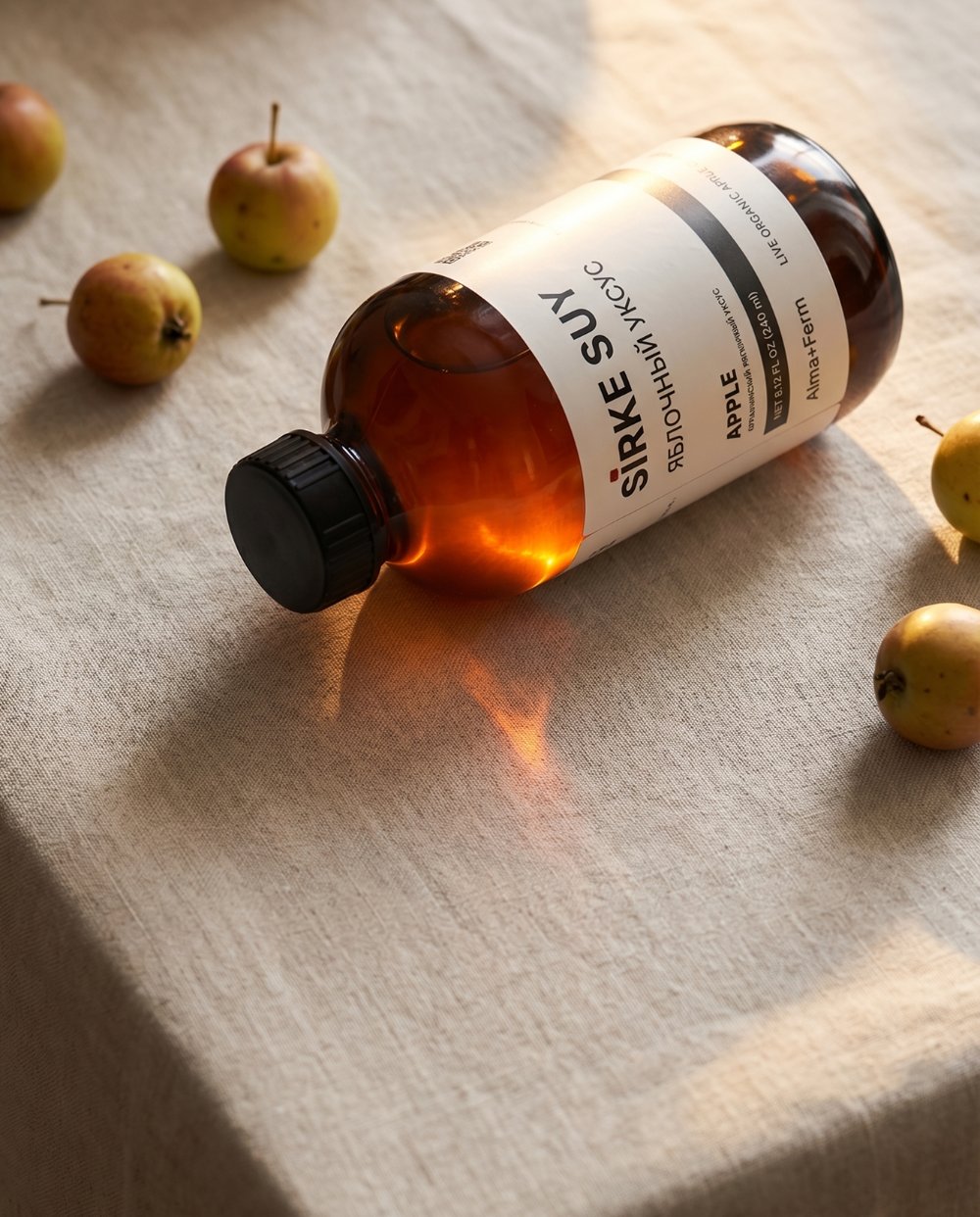
Two apple cider vinegars on the shelf may cost nearly the same but be entirely different products. One is crystal clear with a long shelf life. The other is slightly hazy, with sediment and a 'cloud' inside. The difference is not cosmetic — it reflects how the vinegar was made. Let's break down what unfiltered and unpasteurized apple cider vinegar actually means compared to the standard clarified kind.
What 'unfiltered' means
Unfiltered vinegar is not subjected to fine clarification, so it retains tiny apple particles and the vinegar mother — a living colony of beneficial bacteria. This is why it looks slightly cloudy and develops sediment over time. For a full explanation of the mother and why it is valued, see our article What Is Apple Cider Vinegar with Mother.
What 'unpasteurized' means
Pasteurization is the heat treatment that stops the living culture in exchange for stability and a longer shelf life. Unpasteurized vinegar is never heated, so the living acetic acid bacteria and organic acids stay in the product. The trade-off is that it needs more careful storage — but this is exactly how vinegar preserves its natural character.
Clarity is not a sign of quality. Behind perfect transparency often lie filtration and heat treatment that strip away the most valuable parts.
Unfiltered vs clarified: a comparison
| Appearance | living — slightly cloudy with sediment and mother; commercial — crystal clear |
|---|---|
| Processing | living — no filtration or pasteurization; commercial — filtered and heated |
| Living culture | living — preserved; commercial — absent |
| Flavour | living — deep, apple-forward, layered; commercial — sharp, flat |
| Uses | living — drinks, dressings, gastronomy; commercial — mostly household and preserving |
Why living vinegar tastes better
Slow fermentation and the absence of aggressive processing give the vinegar a rich, 'rounded' flavour with apple and woody notes — especially when aged in oak barrels. Clarified commercial vinegar, by contrast, often tastes simply 'sour'. That is why chefs and enthusiasts value living vinegar: it works not just as an acid, but as a flavour in its own right.
How to choose a quality unfiltered vinegar
- Read the label. Look for 'unfiltered', 'unpasteurized', 'with mother'.
- Check the ingredients. Ideally: apples only, no sugar, colourings, or flavourings.
- Look at the bottle. Slight cloudiness and sediment are a good sign.
- Choose glass. Glass packaging preserves flavour better and doesn't react with the acid.
- Know the origin. A transparent account of the raw material is a sign of a responsible producer.
Once you have chosen your vinegar, the next step is how to use it — that's covered in our article How to Use Apple Cider Vinegar.
Unfiltered Vinegar by Alma+Ferm
Living, unpasteurized vinegar from Almaty apples, aged in oak barrels. With the mother preserved and a natural ingredient list.
Frequently asked questions
How does unfiltered vinegar differ from regular vinegar?
Unfiltered vinegar is not clarified or pasteurized, so it appears slightly cloudy and contains the vinegar mother and sediment. Regular commercial vinegar is filtered and heated — it is clear, but has no living culture.
Why is unfiltered apple cider vinegar cloudy?
The cloudiness and sediment are apple particles and the living vinegar mother, which remain because the product is not finely filtered. This is a normal sign of a living product.
How do I choose a quality apple cider vinegar?
Look for labels saying 'unfiltered', 'unpasteurized', 'with mother', a natural ingredient list free of colourings and flavourings, glass packaging, and a clear account of where the apples come from.
Can unfiltered vinegar be used in cooking?
Yes — and this is one of the best ways to use it. Living vinegar is excellent in dressings, marinades, shrubs, and drinks, where its depth of flavour comes through far better than clarified vinegar.